
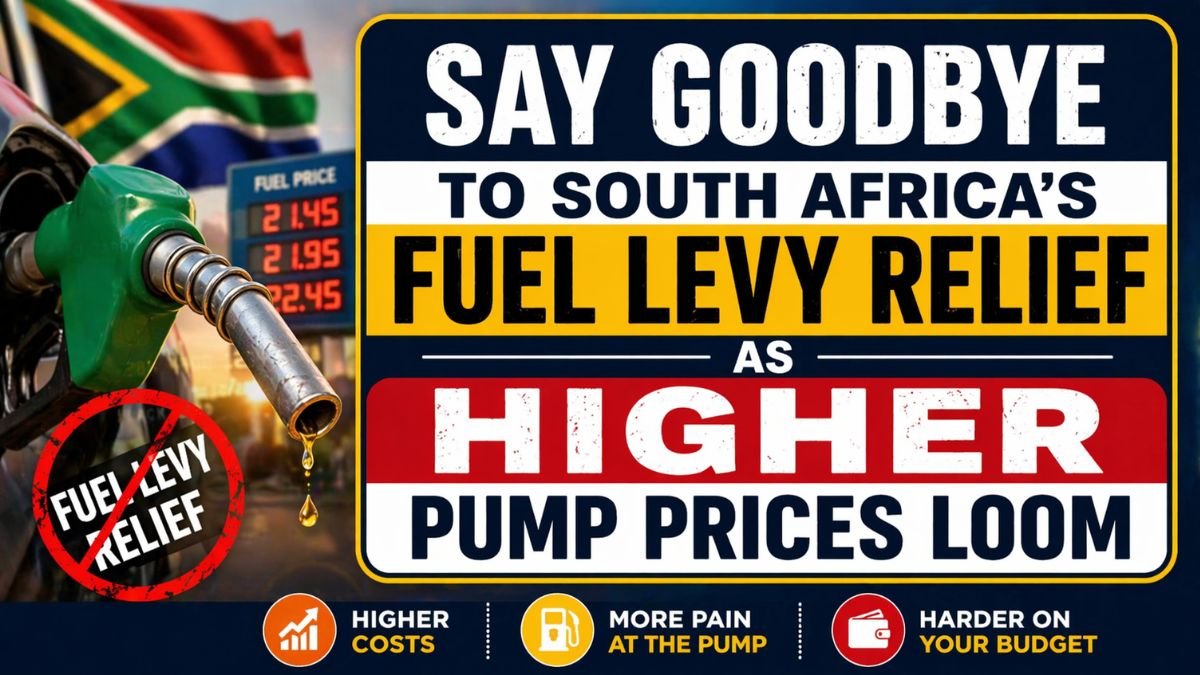
South African motorists may soon need to prepare for rising fuel costs as the government signals that the current R3 reduction in the General Fuel Levy (GFL) is unlikely to continue for much longer.
Introduced as temporary relief, the measure has helped cushion the impact of high petrol and diesel prices, but growing fiscal pressure is making it difficult to extend.
Why the Fuel Levy Cut May End

The fuel levy reduction was designed to provide temporary support to households and businesses facing rising transport costs.
However, extending the relief would come at a significant cost to the national budget. Economic estimates suggest that continuing the R3 cut for just two more months could cost the government more than R10 billion.
With public finances already under pressure, maintaining this level of support is becoming increasingly unsustainable. The current relief is expected to remain in place until 5 May, after which authorities will reassess whether any further assistance is possible.
Global Oil Prices Driving Local Costs

One of the biggest challenges facing South Africa is its reliance on international oil prices. As a “price-taker,” the country must accept global fuel costs shaped by supply and demand, geopolitical tensions, and disruptions in oil-producing regions.
Recent global events have contributed to higher oil prices, and economists warn that these pressures could persist for an extended period. This means that even if temporary relief measures are introduced, they cannot fully offset the impact of global price increases on local fuel costs.
Government Focus Shifts to Long-Term Stability
Rather than continuing direct fuel price relief, the government may shift its focus toward helping citizens adjust to higher living costs. This could include broader economic measures aimed at maintaining stability without placing excessive strain on public finances.

Godongwana has also emphasized that South Africa does not plan to seek financial assistance from the International Monetary Fund. According to the minister, the country has built sufficient fiscal buffers in recent years, allowing it to manage economic challenges independently.
South Africa’s Economic Position Compared to Others
Despite the expected increase in fuel prices, South Africa remains in a relatively stronger position than many other countries on the continent.
One key advantage is its ability to borrow and manage debt in its own currency, reducing exposure to exchange rate volatility.
Additionally, the country’s developed financial system allows it to respond more effectively to economic shocks. While rising fuel prices will still affect households and businesses, these structural strengths provide a level of resilience not seen in many neighboring economies.
Key Facts at a Glance
| Factor | Details |
|---|---|
| Fuel levy relief | R3 reduction currently applied |
| Expected end date | 5 May |
| Cost of extension | Over R10 billion (approx.) |
| Main driver of prices | Global oil markets |
| IMF support | Not being considered |
Impact on Motorists and Businesses
If the fuel levy relief is removed, drivers can expect an immediate increase in petrol and diesel prices. This will likely have a ripple effect across the economy, raising transportation costs and potentially increasing the price of goods and services.
Businesses that rely heavily on logistics, such as retail and agriculture, may face higher operating costs, which could eventually be passed on to consumers. For households, this means tighter budgets and increased financial pressure.
Conclusion
The temporary fuel levy relief has provided valuable support to South African motorists, but its future now appears uncertain.
With global oil prices remaining high and fiscal space limited, the government is signaling a shift away from direct fuel subsidies.
As a result, drivers and businesses should prepare for higher pump prices in the coming months. While South Africa’s economic position offers some stability, the reality of global market forces means that fuel costs are likely to remain a key concern throughout 2026.
