
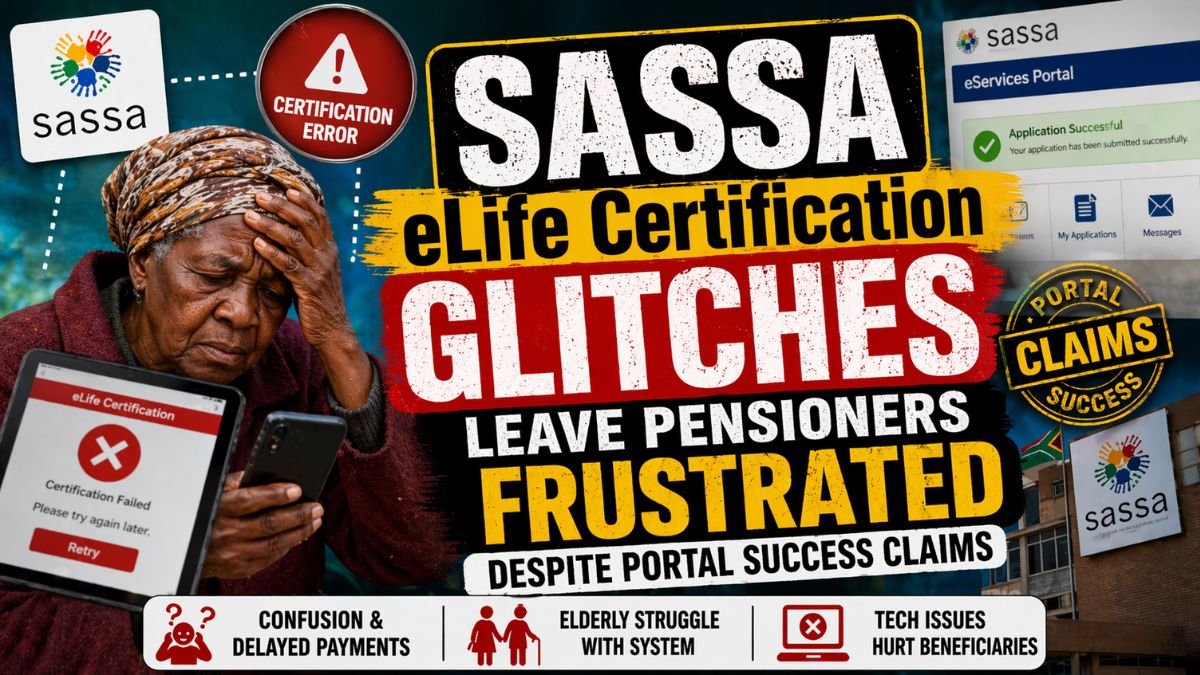
South African grant beneficiaries are continuing to report problems with the SASSA eLife Certification portal, even as the South African Social Security Agency insists that the system is working.
The digital platform was introduced on 30 March 2026 to help verify that beneficiaries are still alive and eligible to receive social grants. The process is meant to reduce fraud, protect public funds and limit unnecessary visits to SASSA offices.

However, many pensioners and social grant recipients say the online verification process has become stressful, confusing and unreliable.
Facial Recognition and OTP Problems Reported
Several beneficiaries have complained that the portal fails during the facial recognition stage. Some say they have tried repeatedly to complete the selfie verification but were unable to move forward.
One pensioner couple said they had attempted the selfie step more than 20 times without success. Others reported that the website kept loading and failed to open their profiles, even after several weeks of trying.

Another major issue involves one-time pins, also known as OTPs. Some users said they received OTPs but the system rejected them as incorrect. Others were told that the Department of Home Affairs was unavailable to verify their details.
These problems have left many beneficiaries worried that their grants could be suspended if they cannot complete the mandatory certification.
SASSA Says Portal Is Working
Despite these complaints, SASSA maintains that the portal is functional. Agency spokesperson Andile Tshona said thousands of beneficiaries had already accessed the online service successfully.

According to SASSA, by 16 April 2026, a total of 13,644 out of 15,499 unique clients who accessed the online verification service had been successfully verified. That represents around 88% of users who used the client portal.
SASSA says this shows that the system is working, although the agency has acknowledged that the service has experienced intermittent downtime.
Why the Portal Is Facing Downtime
SASSA explained that some of the problems are linked to systems outside its direct control. The agency said the eLife Certification service depends on other entities, including verification systems connected to identity checks.
One of the difficulties mentioned by SASSA involves beneficiaries who still use the green ID book. These users may experience additional verification problems because the digital system relies on accurate identity matching.
The agency says the portal itself is not permanently down but may experience downtime when supporting systems are unavailable.
Beneficiaries Fear Grant Suspensions
The biggest concern for many recipients is the possibility of grant suspension. Since life certification is a required process, beneficiaries who cannot complete it may fear losing access to their monthly payments.
For pensioners, disability grant recipients and other vulnerable groups, even a short delay in payment can create serious hardship. Many depend on SASSA grants for food, transport, medication and basic household needs.
This is why users are asking SASSA to provide clearer guidance, stronger technical support and alternative options for those who cannot complete the process online.
What Beneficiaries Should Do
Beneficiaries experiencing problems should keep records of failed attempts, including screenshots where possible. They should also try again later if the portal appears unavailable, as downtime may be temporary.
Those who continue to face problems may need to contact SASSA directly or visit a local office for assistance. Beneficiaries using green ID books should also check whether their personal details are correctly recorded and updated.
Conclusion
The SASSA eLife Certification portal was designed to make grant verification easier and reduce fraud, but many beneficiaries say the system is still causing frustration.
While SASSA claims most users are being verified successfully, reports of failed facial recognition, rejected OTPs and Home Affairs verification errors suggest that the rollout remains uneven.
For vulnerable beneficiaries, the issue is not just technical — it affects their sense of financial security. SASSA may need to improve communication, provide stronger support and ensure that no eligible beneficiary is unfairly penalised because of system failures.
