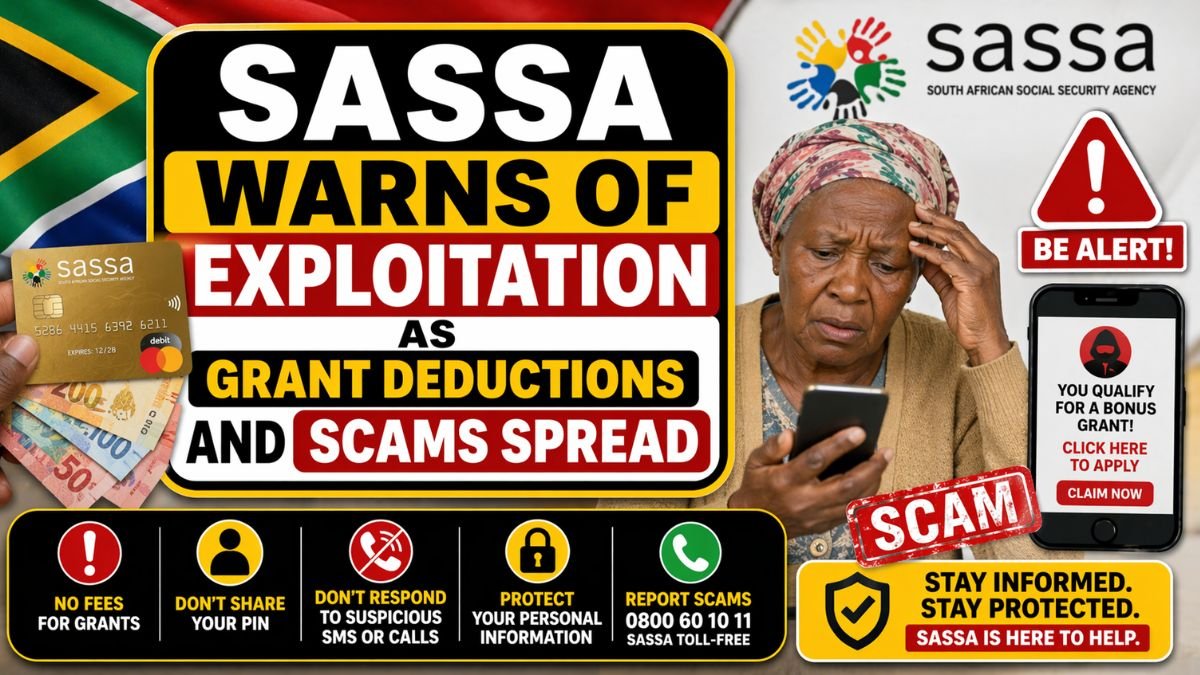
The South African Social Security Agency (Sassa) has issued a strong warning after growing reports of social grant beneficiaries being exploited through unauthorised deductions and other scams.
The agency says it is deeply concerned that vulnerable people, especially older beneficiaries, are being targeted by individuals and businesses seeking to profit from their grants without proper consent.
According to Sassa, the issue has become more alarming following reports that some beneficiaries were misled into signing documents that later resulted in deductions from their monthly payments.
The agency has also raised concern over the illegal sale of queue positions outside its offices, where desperate beneficiaries are being forced to pay money just to access services that should be free.
Sassa Raises Alarm Over Unauthorised Deductions
Sassa’s Gauteng region said it is disturbed by allegations that beneficiaries are being tricked into signing paperwork linked to insurance policies or funeral plans without fully understanding what they are agreeing to.
In one widely shared case, an elderly beneficiary claimed she had been deceived into completing forms that led to deductions from her grant.
The agency believes these incidents show a clear pattern of exploitation aimed at people who rely heavily on social assistance to survive.
For many recipients, even a small deduction can cause serious financial hardship, especially when grant money is meant to cover food, transport, electricity, and other daily needs.
No Official Partnership With Insurance or Funeral Companies
Sassa has made it clear that it does not work with insurance companies, funeral service providers, or other financial businesses to register beneficiaries for products without their full knowledge and consent.
This message is important because some scammers appear to be using confusion around official systems to mislead grant recipients.
The agency says it continues to receive complaints from beneficiaries who notice unexplained deductions on their grants.
In many cases, these deductions are believed to be linked to funeral or insurance-related products that beneficiaries say they never knowingly accepted.
This has created fear and frustration among grant recipients, many of whom feel powerless when trying to stop deductions or get answers about how they were enrolled in the first place.
Exploitation at Sassa Offices Also Under Scrutiny
In addition to unauthorised deductions, Sassa has warned about the illegal selling of queue positions outside its offices.
This practice targets people who are often elderly, disabled, or in urgent need of assistance. Instead of being helped fairly, some beneficiaries are pressured into paying for access to a place in line.
This kind of behaviour not only takes advantage of vulnerable people but also damages trust in the grant system.
Sassa has stressed that no one should pay to stand in a queue or receive help at a government office. All official services should be provided without extra charges.
Sassa Urges Beneficiaries to Stay Alert
The agency is calling on beneficiaries to be cautious when signing any documents and to avoid dealing with strangers who claim they can assist with grant-related matters for a fee.
Beneficiaries are encouraged to carefully read all paperwork, ask questions, and seek direct help from Sassa officials before agreeing to any form or service.
Sassa also wants beneficiaries to report suspicious behaviour, unauthorised deductions, or scams as soon as possible. Early reporting can help prevent further abuse and may assist authorities in identifying those responsible.
Why This Warning Matters
Social grants are a lifeline for millions of South Africans. Any illegal deduction or scam involving these payments can leave already struggling households in even worse conditions.
When beneficiaries lose money through fraud or deception, the impact goes far beyond finances. It also weakens confidence in a system meant to protect the most vulnerable.
Conclusion
Sassa’s warning highlights a serious and growing problem affecting grant beneficiaries across South Africa. From unauthorised deductions to the illegal sale of queue spots, these acts of exploitation place vulnerable people at even greater risk.
Beneficiaries should remain alert, avoid signing unclear documents, and report suspicious activity immediately. Protecting social grants is essential to ensuring that support reaches the people who need it most without interference or abuse.
